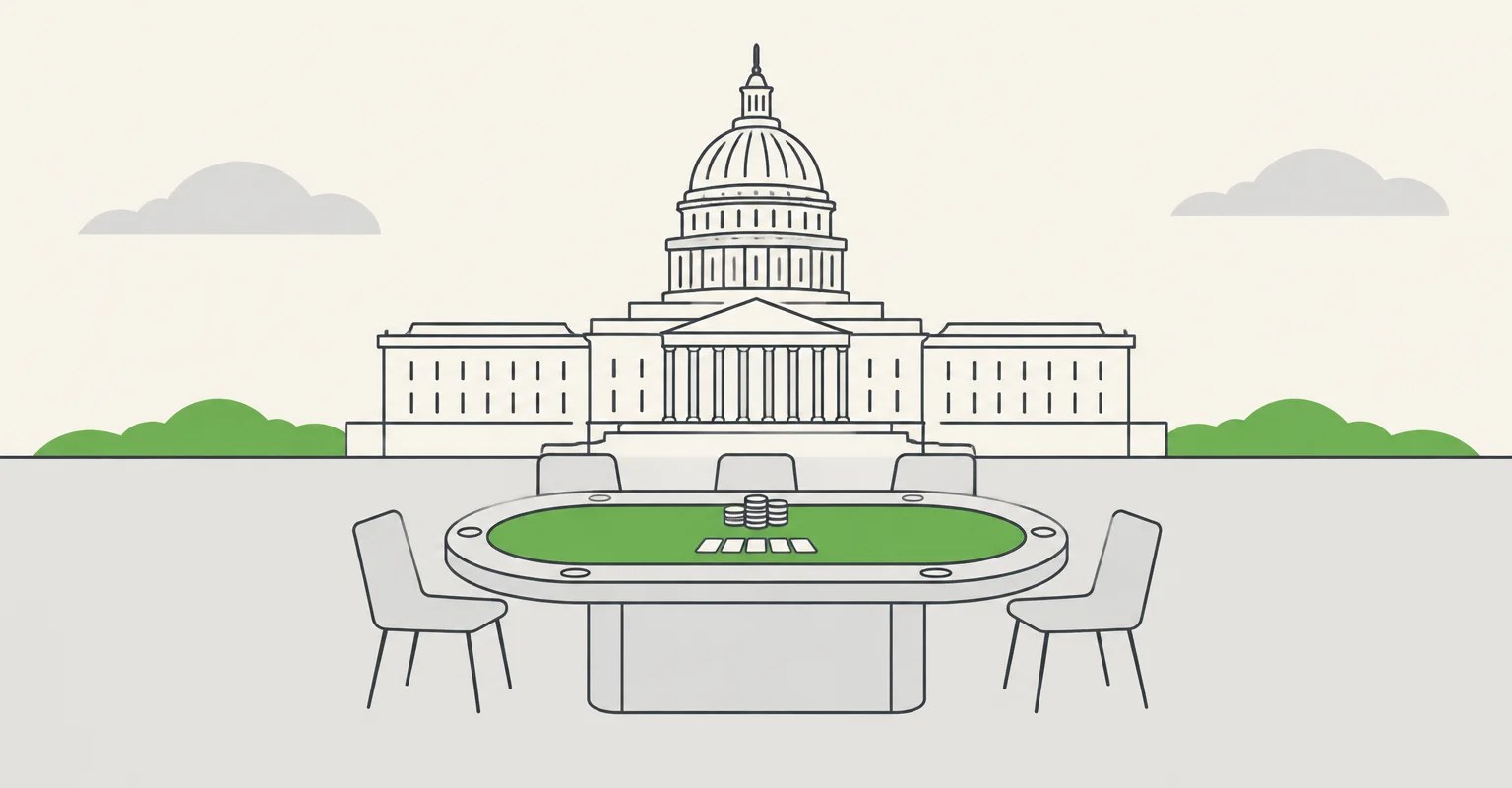
A D.C. Council committee has advanced legislation that would legalize and regulate online poker and casino games in the District, while replacing a proposed prohibition on dual-currency sweepstakes casinos with a route to licensing.
The Committee on Human Services voted 3-1 on Nov. 18 to move B26-0656, the Internet Gaming and Consumer Protection Act of 2026, forward. Christina Henderson cast the sole dissenting vote, saying she did not think the District could “build our revenue on the backs of people’s addictions.”
As reported on Nov. 18, committee approval began rather than completed the bill’s compressed path through the Council before the end of its current term.
The measure would authorize internet casino offerings including poker, slots, blackjack, roulette and live-dealer games. It would also bring dual-currency “social plus” sweepstakes-style games within the licensing system that would apply to other covered internet gaming, rather than imposing the outright ban contemplated in the original proposal.
The bill would set a 21-and-over minimum for internet gaming and raise the age for most other legal gambling in the District from 18 to 21, excluding the lottery. Licensed operators would pay a 25% tax on adjusted gross internet gaming revenue, while live-dealer revenue would be taxed at 12.5%. The proposal also includes 2% community-impact and regulatory assessments.
An operator would face a $2 million application or licensing fee and a $1 million renewal charge every five years, up from a $500,000 renewal fee in the introduced bill. The measure would direct the first $750,000 in fiscal 2027 iGaming tax revenue to the Department of Behavioral Health for gambling-addiction services.
Consumer-protection provisions include deposit, spending, loss and time limits, self-exclusion and cooling-off periods of at least 72 hours. Operators could run no more than two brands, while promotional credits would be capped at 1.75% of adjusted gross revenue. The Office of Lottery and Gaming could issue cease-and-desist orders against unlicensed internet gaming or unlawful sweepstakes operations, with fines potentially reaching $100,000 per violation and the attorney general able to bring enforcement actions.
Live-dealer games would have to be streamed from a District studio, and operators would need labor-peace agreements covering studio workers. The committee expected the proposal to create 100 union jobs. The Office of Lottery and Gaming had identified more than 20 unlicensed online sweepstakes sites operating in a legal gray area in the District as of May.
The committee report estimated that District residents wagered more than $1 billion on illegal iGaming sites in 2025. The chief financial officer projected $62.6 million in net revenue from the measure over fiscal years 2027 through 2030, including $47.3 million in gaming-tax proceeds. After regulatory costs, the projected net gain was $58.7 million, although the estimate accounted for lower lottery earnings and lost sports-wagering tax revenue resulting from the higher gambling age.
Internet gaming could not begin until the chief financial officer certified that the regulatory system was ready. The office would have 30 days after the act took effect to establish an application process. The introduced legislation also permits reciprocal agreements with other jurisdictions for lawful pooled liquidity and interstate poker, subject to federal law.
The full Council must pass the bill in two readings by Dec. 15 or it will lapse with the end of Council Period 26 and require reintroduction. Because District law requires at least 13 days between readings, the Dec. 1 meeting is the necessary first-reading date before a Dec. 15 second reading. If approved, Mayor Muriel Bowser would have 10 days to act before congressional review begins.